

That faint rotten-egg smell near your stove, or a hissing sound behind the water heater, is not something to sleep on. If you’re searching for gas leak detection in Greenville, SC, chances are you already noticed a warning sign and want someone to check it properly, not just wave a sensor around and call it good. Ethical Plumbing sends licensed, background-checked technicians who are trained to find the actual source of the leak and fix it right, not just confirm your suspicion and hand you a bill.
Contact Ethical Plumbing Service in Taylors, SC
Why a Gas Leak Is Not Something to Wait Out
Natural gas is odorless on its own. Utility companies add mercaptan, the chemical responsible for that sulfur smell, so people have some way to notice a leak before it becomes dangerous. That’s the whole warning system: a smell, sometimes a hissing sound near a fitting, occasionally dead grass over a buried line. Miss those signs, or have them checked by someone who doesn’t dig past the surface, and the risk compounds.
Left alone, a gas leak can lead to:
- Fire or explosion risk if gas accumulates in an enclosed space like a crawl space or utility closet
- Carbon monoxide buildup from appliances not combusting properly
- Headaches, dizziness, or nausea from prolonged low-level exposure
- Higher gas bills from gas escaping before it ever reaches your appliances
- Code violations that surface later during a home sale or insurance inspection
The danger isn’t just the leak itself. It’s a leak that gets “found” by someone who checks the obvious spot, seals it, and never checks whether the rest of the system, the pressure, the connections, the appliance hookups, is sound. That’s where a lot of Greenville homeowners get burned by a quick, cheap fix that comes back six months later.
How We Actually Detect and Repair Gas Leaks
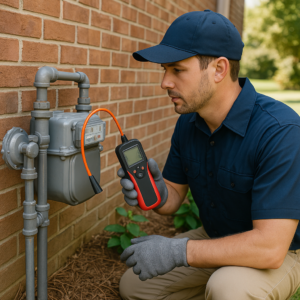
Most companies advertise “advanced equipment” and leave it there. What matters more is what the technician does with it and what they check that others don’t bother with.
We test the whole system, not just the spot you called about. If you called because you smelled gas near the stove, we’re not just checking the stove connection. We check line pressure across the system, inspect fittings and connections at every appliance, and look for the kind of slow, low-volume leaks that don’t always throw an obvious smell but still put your home at risk over time.
We handle the code-compliance details competitors skip. On gas line work, that includes things like proper venting and shutoff placement that a lot of techs either don’t know to check or don’t bother pointing out. If a fix technically stops the leak but leaves something else out of code, we tell you, and we fix it, instead of leaving it for the next inspection to catch.
We explain what we found and why before we start any repair. Before pricing ever comes up, you’ll know exactly what’s leaking, why it’s leaking, and what we’re proposing to do about it. No pressure, no vague “there’s a problem back here” without specifics. If it’s a simple fitting repair, we’ll say so. If it’s something bigger, you’ll understand why before you agree to it.
That last point matters more than it sounds. A lot of our new customers in Greenville have had a previous plumber “detect” a leak, patch it, and never explain what actually caused it in the first place. Ours will.
What Our Technicians Check on Every Gas Leak Call
- Gas meter and regulator condition
- Line pressure throughout the system, not just at the point of complaint
- Every appliance connection: water heater, furnace, range, dryer, fireplace insert
- Fittings, unions, and flex connectors for corrosion or looseness
- Venting and shutoff valve placement for code compliance
- Any signs of a slow leak that hasn’t yet produced an obvious smell
Every technician we send is licensed and background-checked, and every one of them pursues additional licensing rather than being discouraged from it, which is more common in this trade than most homeowners realize.
A Quick Fix Isn’t the Same as a Real Fix
Here’s the pattern we run into most often: a homeowner calls someone out for a gas smell, that company tightens the one fitting that was hissing, and the invoice says “leak repaired.” Technically true. But if the rest of the system was never pressure-tested, nobody actually knows whether that was the only weak point or just the loudest one.
We’ve walked into homes where a previous company sealed an obvious leak at the stove but never checked the water heater connection ten feet away, which was leaking slowly enough not to smell like much yet, but was still leaking. That’s the difference between someone stopping the symptom you called about and someone actually clearing the system. It’s the same principle we apply to water heater installs: check the whole system’s pressure, not just the part someone asked about, because the part nobody asked about is often where the next problem starts.
Gas Leak Detection Across Greenville, SC
Greenville’s older neighborhoods and its newer builds present different problems, and it matters which one you’re in. In craftsman-era homes near West Greenville and along Augusta Road, gas lines are often original or only partially updated, and fittings that were sound decades ago have had a lot of time to corrode. We’ve found slow leaks at union joints in these homes that had gone unnoticed because the smell was faint enough to write off as “just an old house smell.”
Newer construction in Verdae or the Pelham Road corridor tends to have different issues: PEX and modern gas line materials installed correctly at the time, but appliance swaps and DIY connections done later that weren’t torqued or sealed properly. We check those connections specifically because they’re the most common source of a leak in a home that’s otherwise only a few years old.
Homes near Cleveland Park, North Main, and Overbrook often combine both problems, older supply lines feeding newer appliances, which is exactly the kind of mixed system where checking only “the spot you called about” misses things. Our technicians live and work in this area, so they’ve seen the pattern enough times to know where to look first.
Gas Leak Detection FAQ
How can you tell if you have a gas leak in your home?
The most reliable sign is smell, that rotten-egg or sulfur odor mercaptan is added specifically to produce. A hissing or whistling sound near a gas line, meter, or appliance connector is the next most common indicator. Some homeowners also notice dead or discolored grass over a buried line, or an unexplained jump in their gas bill. If you notice any of these, don’t try to pinpoint it yourself by smell alone; get a technician out to test pressure and check connections properly.
Is it safe to stay in a house with a gas leak?
If you smell gas strongly or hear hissing, leave the house immediately, don’t flip light switches or use your phone inside, and call your gas utility or 911 from outside. For a fainter smell or a suspected slow leak, it’s still worth getting it checked the same day rather than waiting. We’d rather come out and find nothing than have you sit on a real leak because it seemed minor.
Can a plumber detect and repair a gas leak?
Yes. Licensed plumbers are trained and equipped to locate gas leaks, test line pressure, inspect appliance connections, and perform code-compliant repairs. That said, not every plumber checks the whole system the same way, which is exactly why we test pressure and every connection point on every gas leak call, not just the spot you called about.
What should you do if you smell gas in your home?
Don’t light anything, don’t flip switches, and don’t use your phone or a lighter near the smell. Open windows if you can do so on your way out, leave the house, and call from a safe distance, either your gas utility’s emergency line or a licensed plumber if the smell is faint and you’re not in immediate danger. If in doubt, treat it as an emergency.
Call Ethical Plumbing for Gas Leak Detection in Greenville
If you’ve noticed a smell, a hissing sound, or just want a real inspection instead of a quick patch, call Ethical Plumbing at 864-438-0525 or request an appointment online. We’ll check the whole system, tell you exactly what we find, and explain what needs to happen before we ever start work, not after.
We also handle related issues that often come up alongside a suspected gas leak, including water leak detection, gas line installation, and water heater repair and installation when an aging unit turns out to be part of the problem. You can see our full range of plumbing services in Greenville as well.