

Why is my water heater leaking?
A water heater leaking can mean a loose fitting you can live with until tomorrow or a tank that is about to let go. Where the water is coming from tells you which, and the first few minutes matter.
A licensed Master Plumber on every job
4.8from 593 Google reviews
Why is my water heater leaking?
Most water heater leaks come from one of four places: the temperature and pressure relief valve, the drain valve near the bottom, the water connections on top, or the tank itself. Leaks from fittings and valves can usually be repaired. Water coming from the tank body or from under the heater with no other source usually means the tank has failed and needs replacement.
- Shut off power or gas first
- Close the cold water valve
- Find where the water starts
- Tank leaks mean replacement
What to do right now
Turn off the energy
Electric: switch off the water heater breaker. Gas: turn the control knob to Off or Pilot.
Close the cold water valve
The valve is on the cold line above the heater. Turn a round handle clockwise or a lever across the pipe.
Protect the area
Move valuables, put down towels, and check the ceiling below if the heater is in an attic.
Call a plumber
Tell us where the water is coming from. Do not drain or open a tank you suspect has failed.
Where the water is coming from
Dry the heater and the floor, then watch where fresh water appears. Start at the top and work down, because water from a top connection can run down the side of the tank and look like a bottom leak.
- Top of the heater: the cold inlet, hot outlet or their connectors. Often a loose or corroded fitting, which is a repair.
- The relief valve or its pipe: the valve is releasing pressure or temperature, or it is worn. See below.
- The drain valve near the bottom: a plastic or brass valve that drips when worn or not fully closed. Usually a repair.
- Gas heaters, inside the burner area: water dripping onto the burner can be condensation on a cold tank, or a failed tank.
- Under the heater with no other source: the tank has rusted through. This is not repairable.
When the relief valve is dripping
The temperature and pressure (T&P) relief valve is a safety device. It opens if the water gets too hot or the pressure in the tank gets too high, so a tank cannot build enough pressure to burst. A valve that drips now and then is telling you something.
The most common cause in Upstate homes is thermal expansion. When water heats, it expands, and if your home has a check valve or pressure regulator on the main line, that extra water has nowhere to go. A working expansion tank absorbs it. Other causes are a thermostat set too high, house water pressure that is too high, or a worn valve. Never cap or plug a relief valve. It is there to keep the tank from becoming dangerous.
Repair or replace?
Leaks from fittings, connectors, the drain valve or the relief valve are usually repairs, often finished in one visit. A leak from the tank itself is not: the steel tank has corroded through and will only get worse.
Age matters too. Most tank water heaters last about 8 to 12 years. If yours is in that range and has a leak, a water heater replacement is often the better spend, and some households use the moment to switch to tankless. We price repair and replacement side by side so you can choose.
- Repair: loose or corroded fittings, drain valve, relief valve, connectors
- Replace: water from the tank body, rust at the base, a heater past 10 to 12 years with more than one problem
Water heater leaking: common questions
Is a leaking water heater an emergency?
A steady leak or water from the tank is urgent: shut off the power or gas and the cold water valve, then call. A slow drip from a fitting can usually wait for a scheduled visit.
Can a leaking water heater explode?
A tank with a working relief valve should not. That valve is why you should never cap or plug it, even if it drips.
Why is water coming out of the relief valve pipe?
Usually thermal expansion, high water pressure or a temperature set too high. A failed or missing expansion tank is a common cause.
Is it safe to use hot water while it leaks?
Not if the leak is from the tank or the relief valve. Turn it off until a plumber looks at it.
How long do water heaters last in the Upstate?
Most tank heaters last about 8 to 12 years. Regular flushing and anode checks help them reach the upper end.
Will homeowner's insurance cover water damage from a water heater?
Many policies cover sudden water damage but not the heater itself. Check your policy and take photos before cleanup.
How do I prevent another leak?
Flush the tank yearly, check the anode rod, keep the temperature near 120°F, and make sure an expansion tank is installed where needed.
Jobs like this we have handled
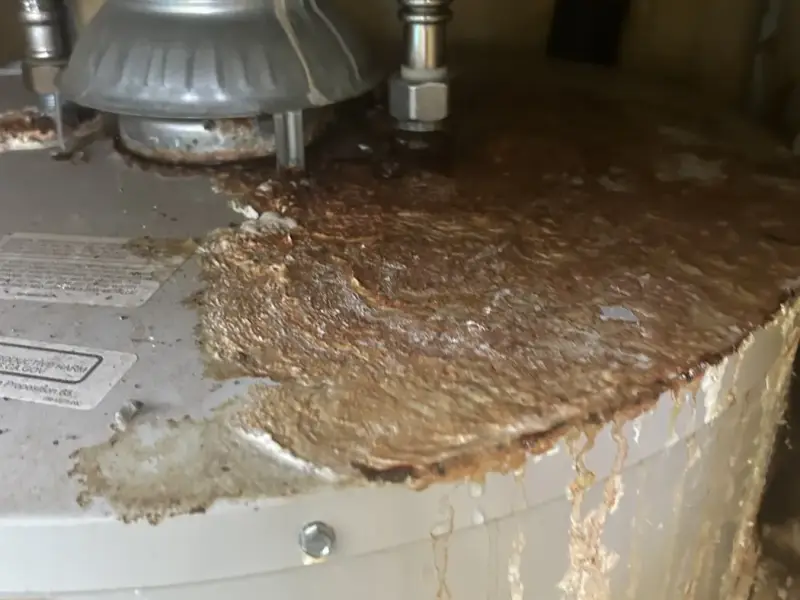 Before
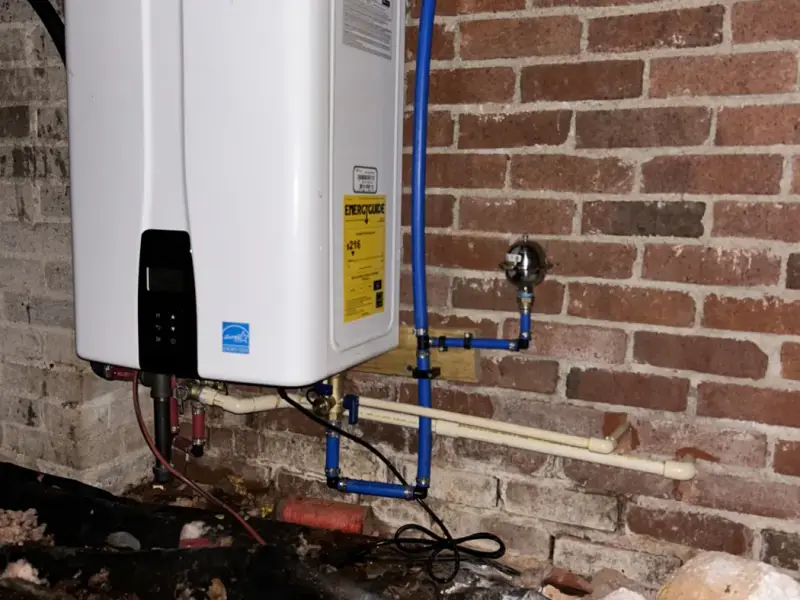 After
4
Navien tankless water heater replaces a corroded tank in Greenville
A corroded tank water heater replaced with a Navien NPE-240A2 tankless unit in the crawl space.
See the full jobReady when you are
Tell us what's going on.
A Master Plumber will find the cause, explain it in plain terms, and put your options in writing before any work starts.
- A licensed Master Plumber on every job
- Serving the Upstate for 16+ years
- Written prices, every job